Short answer: no plug-in law in your state? Buy a power station and panel: legal everywhere, no utility sign-off, and it works in a blackout. A plug-in kit saves more on the bill, but only where a law covers it.
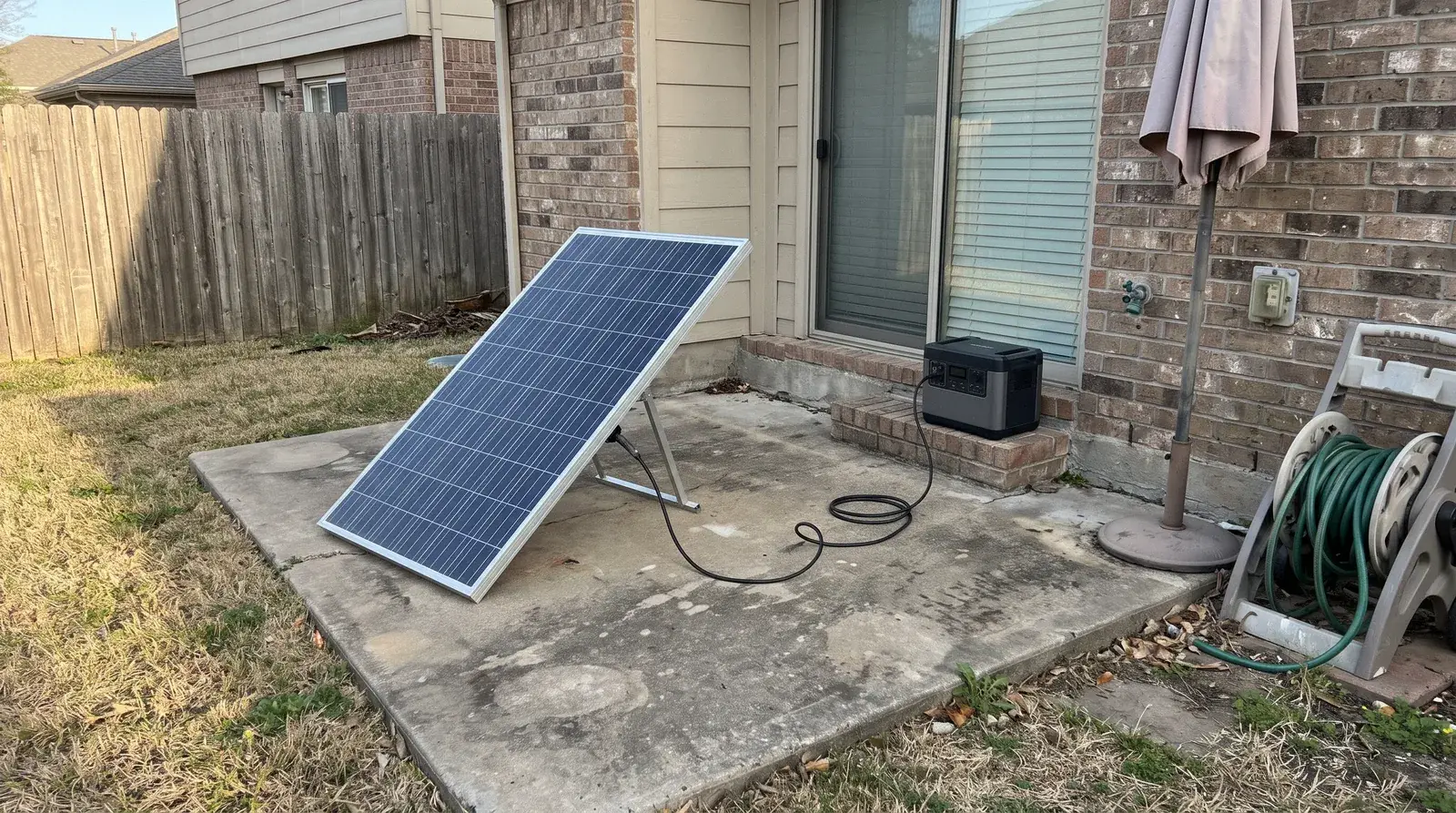
In a state with no plug-in law, a panel that charges a station is the setup that needs no permission from the utility.
The difference in one table
Question
Plug-in solar kit
Power station + panel
Needs a state law
Yes, and a device that meets it
No
Connects to your wiring
Yes, through an outlet
No, it has its own outlets
Lowers your meter reading
Yes, while the sun is up
Only for what you plug into it
Works in a blackout
No, it must shut off
Yes, until the battery runs low
Utility notice
Often required (for example a short online form)
None
Watt cap
Usually 1,200 W (Colorado 1,920 W)
None from a plug-in law
Moves with you
Yes, if your next state allows it
Yes, anywhere
How a plug-in kit works, and where it is legal
A plug-in kit is a panel and a small inverter that plugs into an ordinary outlet. While the sun is up, it supplies part of what your home is using, so the meter turns slower. If the home uses less than the panel makes, the extra flows out to the grid, and the state laws we track do not pay you for it. See what happens to extra power.
That only works legally where a state has carved out an exemption from interconnection rules. In effect now: Utah, Maryland, Vermont, Maine, Colorado, Connecticut. California, New Hampshire, Virginia and New Jersey have signed laws that start later. The device itself has to meet the law, which in California means certification as a plug-in photovoltaic system and a certified anti-backfeed feature. The full list is on the state map.
How a power station and panel works
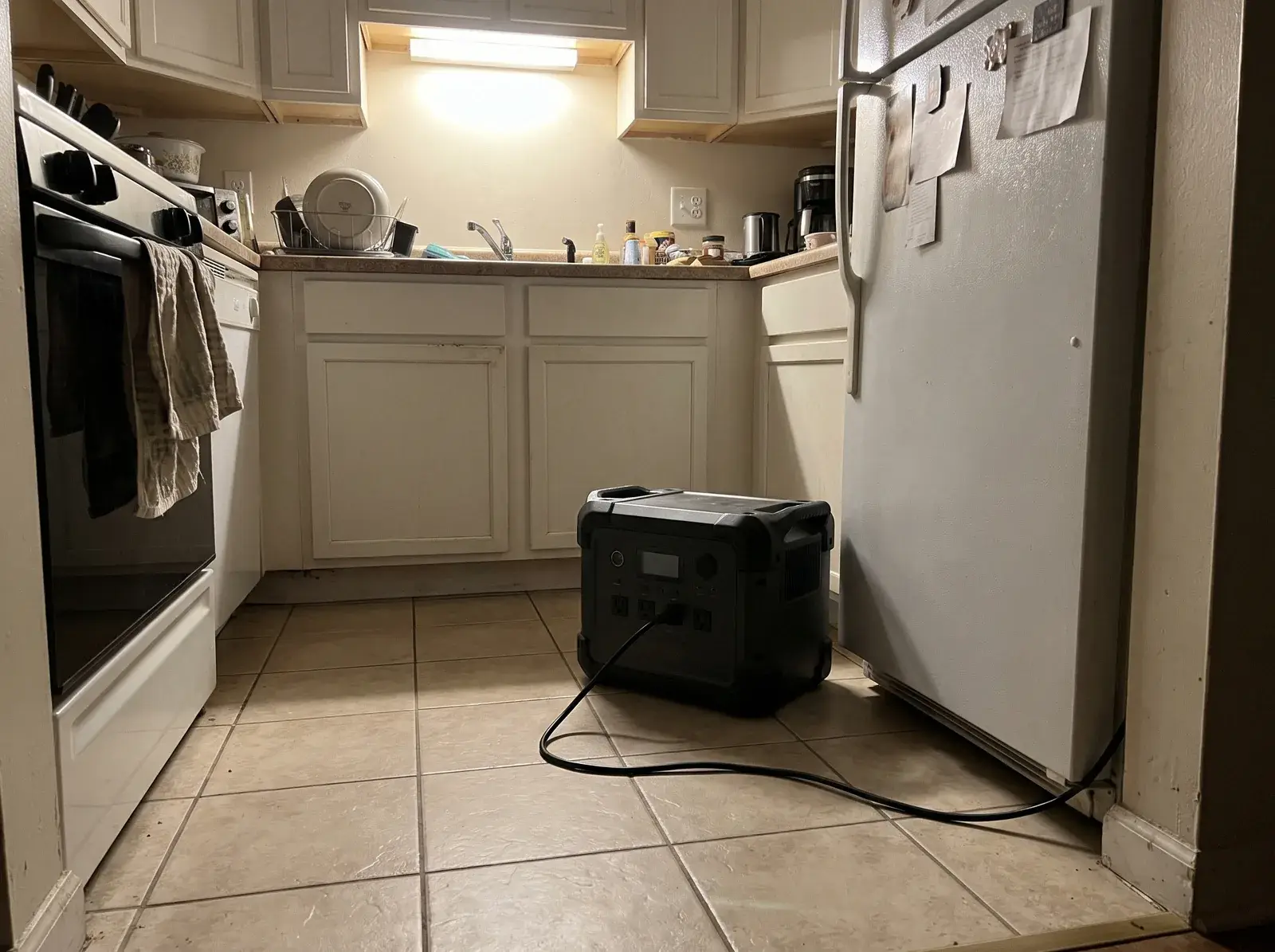
The panel charges a battery in the station. You plug a lamp, a laptop or a fridge into the station's own outlets. Nothing goes back through your walls, so no plug-in law, cap or utility form applies. In Texas, Florida or any state without a plug-in law, this is the legal way to put solar on a balcony or patio today.
A 2 kWh station can carry a typical fridge through a night-long outage. A grid-tied plug-in kit cannot, because it shuts off with the grid.
Which saves more?
On the bill, a plug-in kit wins when it is allowed: everything it makes while you are using power comes off the meter. A station saves only on the loads you move onto it. The savings calculator gives the yearly kWh and dollars for a plug-in system in your state, and suggests ready station bundles for the same size, so you can compare side by side.
The station's payoff is different: backup power, no paperwork, and a setup you can take to any state when you move. For many renters that is worth more than a slightly smaller bill.
Pick by your situation
Your state has no plug-in law: power station and panel. Start with the best kits we found.
Outages are common where you live: a station, or both.
You rent: either way, get the landlord's OK for anything attached to the railing. See landlords and HOAs.
Questions people ask next
Is a power station with a solar panel legal in Texas or Florida?
Yes. A power station charged by its own panel does not connect to the building's wiring, so there is no utility interconnection to approve. Texas and Florida have no plug-in solar law in our tracker, which matters only for devices that feed a wall outlet. A lease or HOA rule can still limit what you put on a balcony.
Which saves more money on the electric bill?
A grid-tied plug-in kit, in a state where it is allowed, because it offsets what your home is drawing while the sun is up. A power station only saves on the devices you plug into it. Run both cases in our savings calculator to see the yearly kWh for your state.
Does a plug-in solar kit work during a power outage?
No. A grid-tied plug-in inverter has to shut off when the grid goes down, so it does not energize a dead line. California's SB 868 requires a certified feature that does exactly that. A power station keeps running its own outlets in an outage.
Can I plug a power station into the wall and charge it from the grid?
Yes, charging a station from a wall outlet is normal and does not backfeed. What a station should not do is push power into your house wiring through a cord. Use its own outlets for your devices.
Can I have both?
Yes. Some owners run a certified plug-in kit for daytime savings and keep a station charged for outages. Keep the two separate: do not connect the station to the plug-in kit's outlet.